At first glance, the cacophony of images strikes one as a visual representation of a stream of consciousness. Raw, unrelated, uncanny, or even macabre depictions of what might be the depths of someone’s soul. That someone is BB Suralta/Bryle B. Suralta, writer and artist, and who knows what else lurks behind this anti-genius.
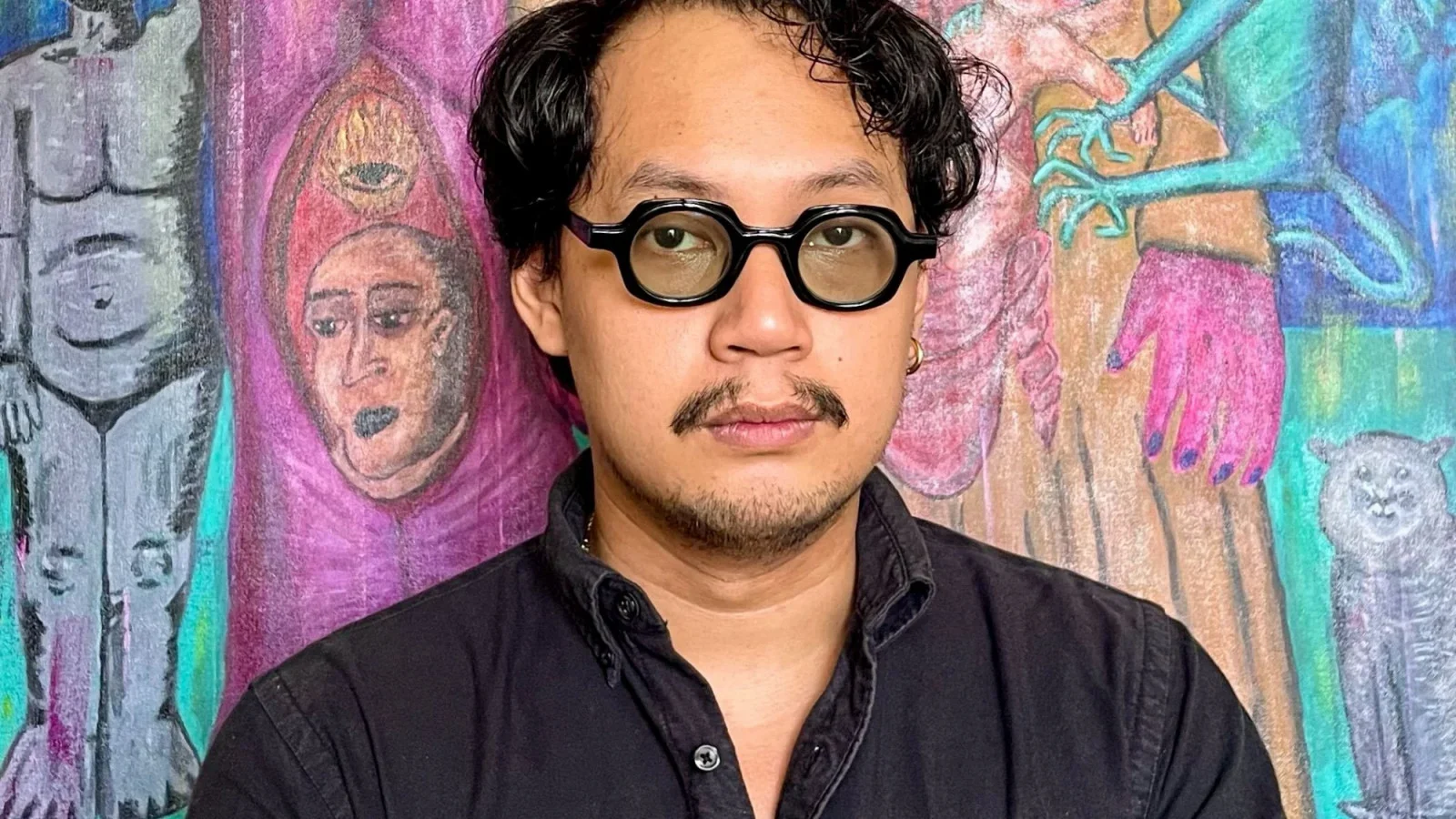
Bryle Suralta | Painter & Writer (photo from Tatler Ph)
In one of the paintings, the image of a headless being, still committed to the end of whatever action it was or is performing brings to mind the cover of Acephale, the literary and philosophical review initiated by Georges Bataille, who also happens to be a writer and artist. Art critic Moses May-Hobbs characterizes Bataille, a librarian, to have “found celebrations and outlets of destructive and divine excess: rituals, sex, and death that merge together.”
Carrying elements that straddle expressionist, fauvist, and even neo-expressionist commitments, he is attempting to push further: “to loosen the image without diluting the emotionality or psychological charge.” Perhaps like a writer he is distilling this language he has been discovering.
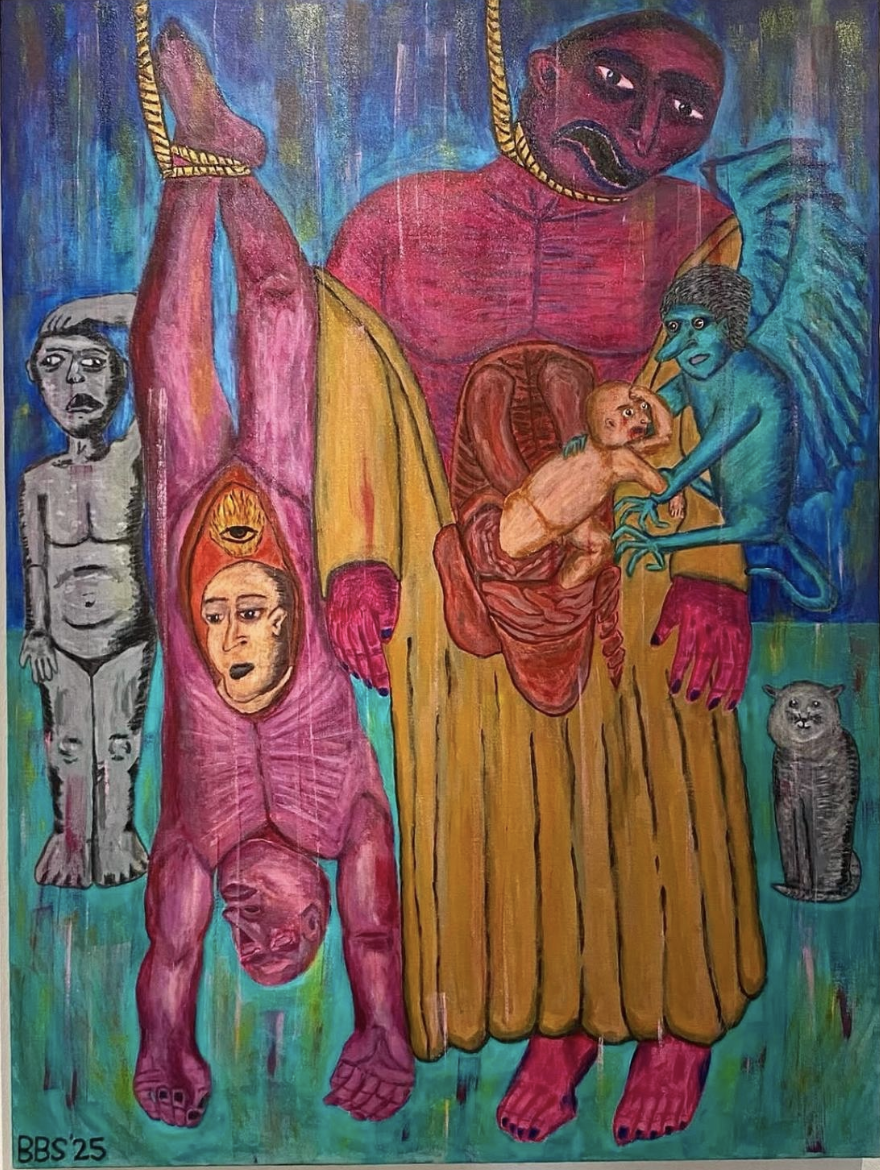
“A Topography Of Betrayal” | 2025
So how did it begin? Having started painting later than most artists (although not unheard of) it was his fixation on what to depict that separates him from the pack. In a sea of landscapes, abstracts, and cute things, his religious references, obscure backgrounds, contorted bodies, and disembodied beings swim deeper into the abyss of unanswered questions and vague answers.
Religious references, from the indigenous to the global, figure consistently, but interestingly stem from the lack thereof his own religious belief. The Philippines prides itself as a Catholic country, where it is somehow blindly passed onto generations. When people decide it's not for them, they usually come up with their own, or branch out into another sub-Catholic denomination, with some more cult-like than others.
His past works mostly seem to allude to society, beings under the sun, subject to new mythologies and half-truths. Speaking of the sun, Bataille also used the motif in his works, but as opposed to a source of light and life, it was as an embodiment of the end, a counterpoint to accepted norms. Suralta and Bataille both appear to wear the hat of the iconoclast.
The artist at the moment, or maybe ever since, has been like a sponge. There is no lack of old or new inspiration to draw from. Like the images in the paintings, the mind seems to meld into previously unseen states (of mind), “pulling apart and recombining” if you will. This movement, not only in subject but in brush stroke, in composition, pushes distortion into the realm of normalcy — which some might describe as absurd.
Circling back to Acephale, which means “headless,” the first issue features on its cover the words “religion. sociologie. philosophie.” It seems to foreshadow Suralta’s arrival some 90 years later, where what can be said with one’s head on straight is, there is horror behind every beauty, and that is perhaps closer to the truth in every image.
Written by Francisco Jin Sung Lee | Koki Lxx
Writer | Artist | Curator
